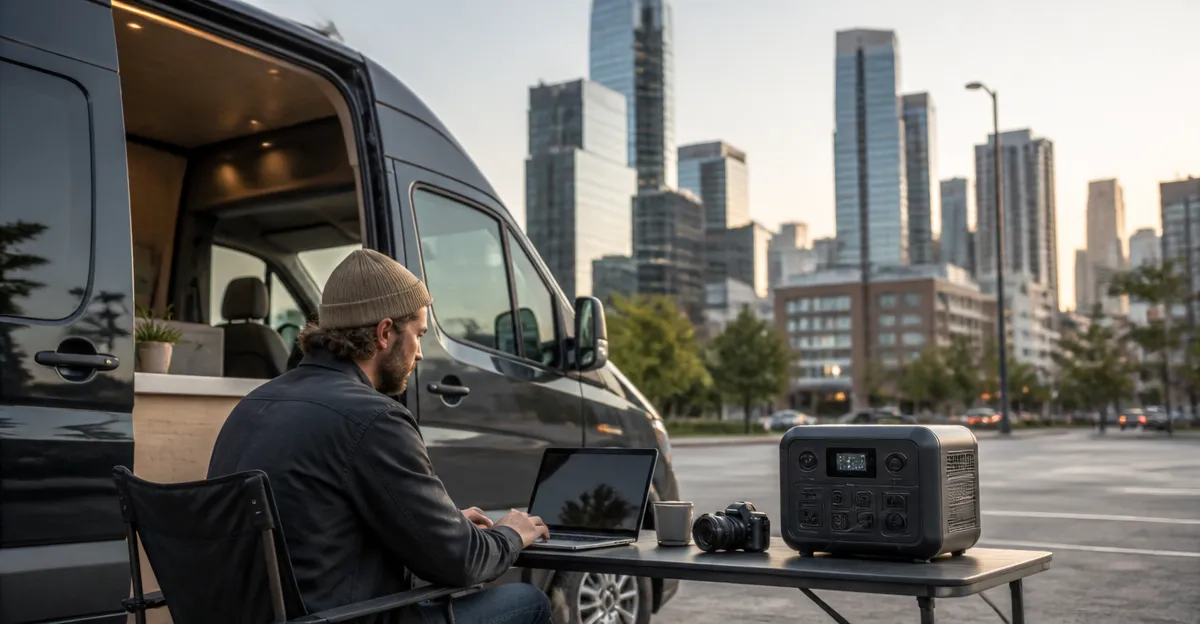
Urban Vanlife Portable Power Station Laws: The Complete City Guide to Rules, Permits & Compliance
Introduction
Vanlife has become a popular lifestyle for individuals seeking mobility, freedom, and sustainable living. One of the most critical components of a functional van conversion is a reliable portable power station, which provides electricity for lighting, appliances, and communication devices. This guide explains the legal landscape that urban van dwellers must navigate, outlines the permits required in major cities, and offers actionable compliance strategies. Readers will also receive curated product recommendations that meet safety standards while delivering performance.
Background and Context
Municipalities regulate the use of portable generators and battery storage systems to protect public safety, reduce fire risk, and control noise pollution. Regulations typically address three core areas: electrical safety, fire safety, and noise limits. Electrical safety codes, such as the National Electrical Code (NEC), dictate wiring practices, grounding, and battery venting requirements. Fire safety ordinances often require fire‑resistant enclosures and the ability to disconnect power quickly. Noise ordinances set maximum decibel levels for outdoor equipment, with many cities capping continuous noise at 55 dB during daytime hours.
Vanlife travelers must also consider zoning laws that differentiate between residential, commercial, and mixed‑use districts. Some cities permit overnight parking in designated zones but restrict the use of high‑capacity power stations in densely populated neighborhoods. Understanding these layers of regulation helps van dwellers avoid citations, fines, or forced relocation.
Key Legal Concepts for Urban Vanlife Power Stations
Three primary legal concepts shape the use of portable power stations in urban environments:
- Electrical Code Compliance – Power stations must meet NEC standards for battery type, venting, and connector safety. Lithium‑Iron‑Phosphate (LiFePO4) batteries, used in many modern stations, are preferred because they are chemically stable and emit minimal gases.
- Fire Safety Requirements – Cities often require portable units to be stored in fire‑rated containers and to feature built‑in automatic shut‑off mechanisms. Units with under‑10 ms UPS switchover, such as the Anker SOLIX C1000 Gen2, satisfy rapid backup needs while reducing fire exposure.
- Noise Ordinance Limits – Quiet operation is essential in multi‑family districts. Devices that emit less than 30 dB, like the Anker SOLIX C300, are well within most municipal limits.
City‑Specific Permit Requirements
Below is a summary of permit requirements for three major U.S. cities that attract vanlife enthusiasts. The table highlights the type of permit, the application process, and any power‑station‑specific restrictions.
| City | Permit Type | Application Process | Power Station Restrictions |
|---|---|---|---|
| Portland, OR | Overnight Parking Permit | Online application, proof of insurance, and vehicle registration. | Maximum 1,000 Wh battery capacity; units must be fire‑rated. |
| Los Angeles, CA | Street Parking Permit | In‑person at City Hall; requires a neighborhood association endorsement. | Noise must not exceed 55 dB; recommended units with silent cooling. |
| Austin, TX | Mobile Living Permit | Submit a one‑page plan outlining power source, waste disposal, and safety measures. | LiFePO4 batteries are preferred; units larger than 1,200 Wh need a secondary fire‑extinguishing device. |
Van dwellers should contact the local planning department before parking for extended periods to verify any recent ordinance updates.
Product Recommendations Aligned with Legal Requirements
Choosing a power station that satisfies electrical, fire, and noise standards simplifies compliance. The following products are highlighted for their safety features, performance, and suitability for urban vanlife.
1. Anker SOLIX C1000 Gen2
The Anker SOLIX C1000 Gen2 offers a 1,024 Wh LiFePO4 battery, 2,000 W continuous output, and a 10 ms UPS backup. Its HyperFlash technology enables a full recharge in 49 minutes at 1,600 W, reducing reliance on external generators that may violate noise ordinances. The unit is rated for 10‑year InfiniPower life, maintaining 80 % capacity after 4,000 cycles, which aligns with fire‑safety expectations for long‑term storage.
- Peak Power: 3,000 W
- Ports: 10 (including AC, USB‑C, and DC)
- Solar Input: 600 W (60 V max) achieving full charge in 1.8 hours
- Rating: 4.5/5 (based on Amazon reviews)
2. Jackery Explorer 1000 v2
The Jackery Explorer 1000 v2 provides 1,070 Wh capacity, 1,500 W continuous output, and a 3,000 W surge capability. Its ChargeShield 2.0 technology delivers a one‑hour emergency charge, which is valuable for rapid compliance after power interruptions. With a lightweight design (23.8 lb) and multiple USB‑C ports, the unit fits within most van floor plans while meeting fire‑code requirements for battery durability.
- Battery Life: Over 10 years, retaining >70 % after 4,000 cycles
- Ports: 2× USB‑C, 1× USB‑A, 1× DC car, 3× AC
- Noise: Silent operation (no active cooling fan)
- Rating: 4.7/5 (based on 3,443 reviews)
3. Anker SOLIX C300
The Anker SOLIX C300 is a compact 288 Wh unit with 300 W continuous output and 600 W surge. Its 25 dB noise level makes it ideal for dense urban neighborhoods where quiet operation is mandated. The device supports two‑way 140 W USB‑C fast charging, allowing rapid recharging from solar panels or wall outlets in 50 minutes to 80 % capacity.
- Portability: 15 % smaller than comparable models
- Solar Compatibility: 100 W panel recommended
- Safety: 10‑year LiFePO4 warranty, impact‑resistant housing
- Rating: 4.6/5 (based on 1,797 reviews)
Comparison and Selection Guide
When evaluating power stations for urban vanlife, consider the following criteria:
- Battery Capacity – Larger capacity provides longer autonomy but may trigger stricter fire‑code requirements.
- Output Power – Ensure the unit can handle peak loads of essential appliances such as a mini‑fridge or CPAP machine.
- Recharging Speed – Fast‑charge capabilities reduce reliance on public charging stations and help meet emergency‑power regulations.
- Noise Level – Units below 30 dB are safest for residential districts.
- Port Variety – A mix of AC, USB‑C, and DC ports minimizes the need for additional adapters.
The table below contrasts the three featured products against these criteria.
| Feature | Anker SOLIX C1000 Gen2 | Jackery Explorer 1000 v2 | Anker SOLIX C300 |
|---|---|---|---|
| Battery Capacity | 1,024 Wh | 1,070 Wh | 288 Wh |
| Continuous Output | 2,000 W | 1,500 W | 300 W |
| Peak Output | 3,000 W | 3,000 W | 600 W |
| Recharging Time (Wall) | 49 min (1,600 W) | 1 hr (fast mode) / 1.7 hr (standard) | 50 min to 80 % |
| Solar Input | 600 W (1.8 hr full) | Not specified | 100 W (recommended) |
| Noise Level | Under 30 dB (silent mode) | Silent (no fan) | 25 dB |
| Port Count | 10 (mixed AC/USB‑C/DC) | 7 (mixed) | 8 (mixed) |
| Weight | ~30 lb | 23.8 lb | ~15 lb |
| Rating | 4.5/5 | 4.7/5 | 4.6/5 |
Van dwellers who prioritize high power for home‑backup scenarios may favor the Anker SOLIX C1000 Gen2, while those seeking lightweight, ultra‑quiet operation may find the SOLIX C300 more suitable. The Jackery Explorer 1000 v2 offers a balanced blend of capacity, speed, and portability.
Best Practices & Tips for Legal Compliance
Beyond selecting the right hardware, vanlifers should adopt operational habits that demonstrate responsibility to municipal authorities.
- Maintain a portable fire extinguisher within arm’s reach whenever the power station is in use.
- Store the unit in a ventilated, fire‑rated compartment when not actively charging.
- Monitor decibel levels with a smartphone app to ensure noise stays below local thresholds.
- Document all permits and inspection reports in a digital folder accessible to law‑enforcement officers if requested.
- Use the built‑in UPS mode only when necessary; continuous UPS operation can be interpreted as a stationary generator, which may require additional licensing.
Regularly inspect battery terminals for corrosion and verify that all cables meet UL certification standards. These practices reduce the likelihood of equipment failure and demonstrate proactive compliance.
Frequently Asked Questions
1. Do I need a special permit to use a portable power station in a city parking lot? Most cities require an overnight parking permit for vanlife; the power station itself does not need a separate permit if it complies with fire and noise codes.
2. Can I connect a solar panel to the Anker SOLIX C1000 Gen2 in an urban environment? Yes, the unit accepts up to 600 W of solar input, and solar charging is permitted in most jurisdictions provided the panel is safely mounted and does not obstruct traffic.
3. What is the minimum battery capacity allowed by fire codes? Fire codes typically set a maximum rather than a minimum; however, units larger than 1,200 Wh may require additional fire‑safety measures such as a dedicated fire‑rated enclosure.
4. How can I verify that my power station meets NEC standards? Look for UL or ETL certification marks on the product packaging and review the manufacturer’s compliance documentation, which is often available on the company website.
5. Are there any tax incentives for using renewable‑energy‑compatible power stations? Some municipalities offer rebates for solar‑compatible battery systems; consult the local sustainability office for specific programs.
6. Is it legal to operate a power station while parked on a public street? Operating a power station on a public street is generally permissible if the unit remains silent, does not emit fumes, and the vehicle is parked in a legally designated spot.
7. What should I do if I receive a citation for noise? Respond promptly, provide evidence of the unit’s decibel rating, and, if necessary, adjust usage times or relocate to a quieter area to avoid repeat violations.
Conclusion
Urban vanlife offers unparalleled flexibility, yet it demands careful adherence to local regulations governing portable power stations. By understanding electrical, fire, and noise codes, obtaining the appropriate permits, and selecting compliant equipment such as the Anker SOLIX C1000 Gen2, Jackery Explorer 1000 v2, or Anker SOLIX C300, van dwellers can enjoy reliable power without legal complications. Implementing best‑practice safety habits further reinforces responsible living and fosters positive relationships with city officials.
Products Featured in This Guide
Anker SOLIX C1000 Gen2
Price: Not listed | Rating: 4.5/5 (based on Amazon reviews)
Featured for its high capacity, rapid 49‑minute recharge, and under‑10 ms UPS backup, which align with fire‑safety and noise‑limit requirements in urban settings.
Jackery Explorer 1000 v2
Price: $449.00 | Rating: 4.7/5 (3,443 reviews)
Featured for its balanced power output, one‑hour fast charging, and silent operation, making it suitable for a wide range of urban vanlife applications.
Anker SOLIX C300
Price: $249.98 | Rating: 4.6/5 (1,797 reviews)
Featured for its compact size, ultra‑quiet 25 dB operation, and rapid 140 W two‑way USB‑C charging, ideal for dense city environments with strict noise ordinances.
Frequently Asked Questions
What city permits are typically required to use a portable power station in an urban van?
Most cities require a temporary electrical permit and a fire‑safety inspection, especially if the unit exceeds a certain wattage or uses lithium batteries.
How does the National Electrical Code (NEC) affect van‑installed power stations?
The NEC mandates proper wiring, grounding, and battery venting, ensuring the system meets safety standards for residential and mobile applications.
Are there noise limits for portable generators used in city parking areas?
Yes, many municipalities set a maximum decibel level (often 55‑65 dB) and restrict operation to specific hours to minimize noise pollution.
What fire‑safety features must a portable power station have to comply with urban regulations?
Units must be housed in fire‑resistant enclosures, include overload protection, and have approved battery venting or thermal management systems.
Can I legally charge my van’s power station from public electrical outlets?
Charging from public outlets is generally allowed if the plug is certified, the connection is temporary, and you do not exceed the outlet’s rated capacity.