Introduction
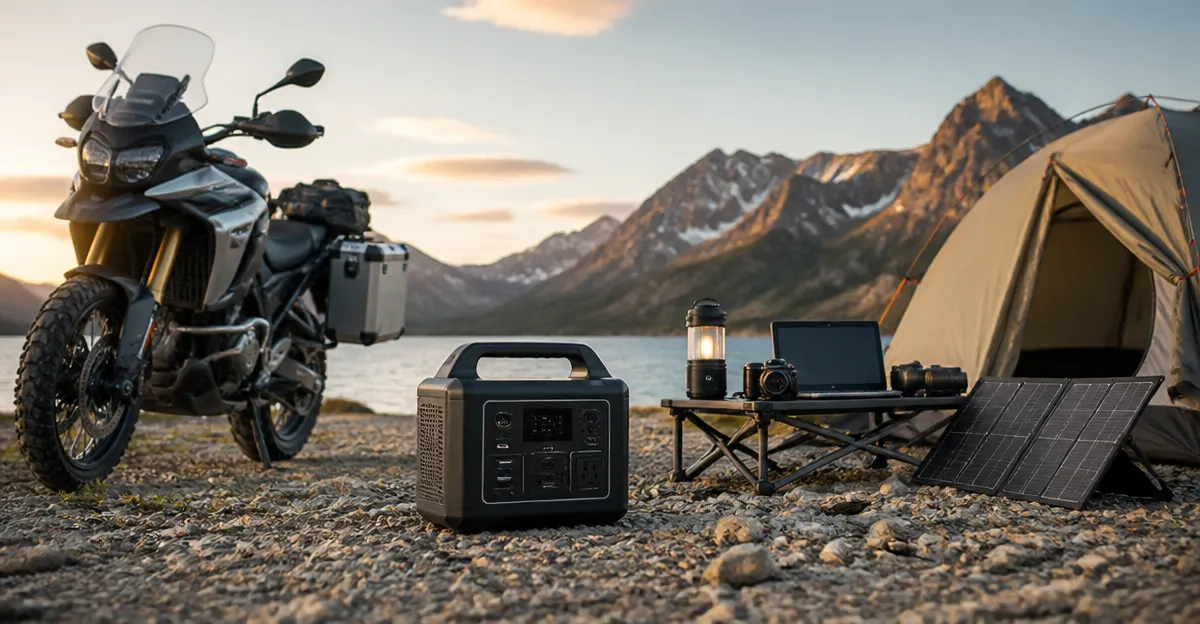
Motorcycle camping demands a balance between mobility and reliable power. Riders often need to keep lights, communication devices, and small appliances operational during long rides without sacrificing luggage space. Selecting a power station that weighs less than ten kilograms while delivering sufficient watt‑hour capacity can transform a remote night into a comfortable experience.
Modern lithium‑iron‑phosphate (LiFePO4) technology provides both safety and longevity, allowing enthusiasts to charge devices repeatedly over many years. The following list highlights eight essential criteria for choosing a portable power station, and it integrates three market‑tested models that meet the weight and performance thresholds.
Top 8 Lightweight Power Stations for Motorcycle Camping
-
Rapid Recharge Capability
When a rider arrives at a scenic overlook, the ability to replenish the battery quickly is paramount. The EF ECOFLOW River 3 offers a one‑hour full charge using X‑Stream technology, eliminating the need for multiple adapters. Its 245Wh capacity combined with a 300W inverter provides ample power for a small fridge, lights, and a phone charger.
Complementing this speed, the Anker SOLIX C300 delivers 140W two‑way fast charging through USB‑C ports, reaching 80% capacity in just fifty minutes when connected to a wall outlet. This rapid turnaround ensures that riders can continue their journey with minimal downtime.
-
Quiet Operation for Nighttime Camps
Noise can disturb wildlife and fellow campers, especially when the engine is turned off for a night under the stars. The River 3 operates at less than 30 dB measured from 1.5 feet, making it one of the quietest options on the market. Its low acoustic profile allows users to run a small heater or charge a laptop without attracting unwanted attention.
Similarly, the Jackery Explorer 300 emits only 25 dB from a distance of 3.3 feet, providing a near‑silent power source for lanterns and communication devices. Both units maintain a calm environment while delivering reliable electricity.
-
Durability and Weather Resistance
Motorcycle travelers frequently encounter rain, dust, and accidental drops. The River 3 is equipped with an IP54 rating, safeguarding the battery against water ingress and ensuring fire‑proof construction. Its drop‑resistant chassis adds confidence when the unit is placed on uneven terrain.
The Explorer 300 also boasts a rugged design with impact resistance and a waterproof seal, allowing it to survive harsh conditions without performance degradation. These durability features are essential for riders who cannot predict the weather on remote trails.
-
High Capacity in a Small Package
Space on a motorcycle is limited, yet a camper may need to power multiple devices simultaneously. The Anker SOLIX C300 provides 288Wh of usable energy within a frame that is fifteen percent smaller than comparable generators. Its 300W continuous output (600W surge) can sustain a portable fan, a GPS unit, and a small cooking appliance.
The Jackery Explorer 300 offers a slightly larger 292Wh capacity while weighing only 7.5 pounds, delivering a comparable power envelope in a compact form factor. Both models illustrate that high energy density does not require bulk.
-
Versatile Output Options
Camping setups often involve a mixture of AC, DC, and USB devices. The SOLIX C300 includes three AC outlets, a 120W car socket, two 140W USB‑C ports, an additional 15W USB‑C port, and a 12W USB‑A port, covering a broad spectrum of charging needs.
The Explorer 300 provides two AC outlets, a 100W USB‑C Power Delivery port, two USB‑A ports, and a 120W car port. This versatility enables riders to power a laptop, a CPAP machine, a drone, and a portable fridge without the need for extra adapters.
-
Integrated UPS for Home Backup
Some motorcycle campers also use their power station as an emergency backup for a small cabin or van. The River 3 features an auto‑switching UPS that transfers load to its output within twenty milliseconds during a power outage, keeping essential appliances such as a refrigerator or communication hub running without interruption.
While the other two models do not advertise a dedicated UPS function, their rapid recharge and high surge capacity allow them to serve as temporary backup solutions during short outages.
-
Long‑Lifecycle Battery Technology
All three units employ LiFePO4 cells, which can endure more than 3,000 charge cycles before capacity falls below 70 percent. The River 3 claims a ten‑year lifespan, the SOLIX C300 guarantees ten years with 3,000 cycles, and the Explorer 300 projects over 4,000 cycles, translating to more than a decade of dependable service for frequent riders.
This longevity reduces long‑term cost of ownership and aligns with sustainable practices by minimizing battery waste.
-
Cost‑Effectiveness and Value
Price sensitivity is a factor for many outdoor enthusiasts. The River 3 is priced at $196.32 and carries a 4.5‑star rating from 858 reviews, indicating strong customer satisfaction. The SOLIX C300 costs $249.98 with a 4.6‑star rating from 1,794 reviews, reflecting premium features such as higher USB‑C power.
The Explorer 300 is available for $198.99 and holds a 4.6‑star rating from 11,091 reviews, making it a highly trusted option in the community. Considering capacity, weight, and feature set, each model offers distinct value propositions for different budgeting scenarios.
Comparison Table
| Model | Weight (kg) | Capacity (Wh) | Continuous Power (W) | Fast Charge Time | Noise Level (dB) | Price (USD) | Rating |
|---|---|---|---|---|---|---|---|
| EF ECOFLOW River 3 | 3.5 | 245 | 300 | 1 hour (AC) | 30 | 196.32 | 4.5/5 (858) |
| Anker SOLIX C300 | 4.0 | 288 | 300 | 50 minutes (80%) | 25 | 249.98 | 4.6/5 (1,794) |
| Jackery Explorer 300 | 3.4 | 292 | 300 | 2.8 hours (80% with 100W solar) | 25 | 198.99 | 4.6/5 (11,091) |
Conclusion
Motorcycle camping enthusiasts require a portable power station that balances weight, capacity, and durability. The EF ECOFLOW River 3 excels in rapid recharge and UPS functionality, the Anker SOLIX C300 stands out for its versatile ports and ultra‑fast USB‑C charging, and the Jackery Explorer 300 offers a quiet, rugged solution with a slightly larger capacity at a competitive price.
By evaluating the eight criteria presented—recharge speed, noise level, durability, capacity, output versatility, UPS capability, battery lifespan, and cost—riders can select the model that aligns best with their specific travel style. Investing in a reliable LiFePO4 power station ensures that essential electronics remain operational throughout the journey, enhancing safety and comfort on every adventure.
Products Mentioned in This Article
Frequently Asked Questions
What weight limit should I look for in a portable power station for motorcycle camping?
Choose a unit under 10 kg to keep your bike’s luggage manageable while still providing ample power.
Why is LiFePO4 technology preferred for camping power stations?
LiFePO4 batteries offer superior safety, longer cycle life, and stable performance across temperature ranges.
How fast can the EF ECOFLOW River 3 recharge on the road?
It reaches a full charge in about one hour thanks to its X‑Stream rapid‑recharge technology.
What minimum watt‑hour capacity is practical for lighting and small devices?
A capacity of 200‑300 Wh typically powers LED lights, phones, and a compact cooler for an overnight stay.
Can I charge a lightweight power station using a motorcycle’s USB outlet?
Yes, most models support 12 V DC input via a cigarette‑lighter plug, allowing you to top up while riding.